
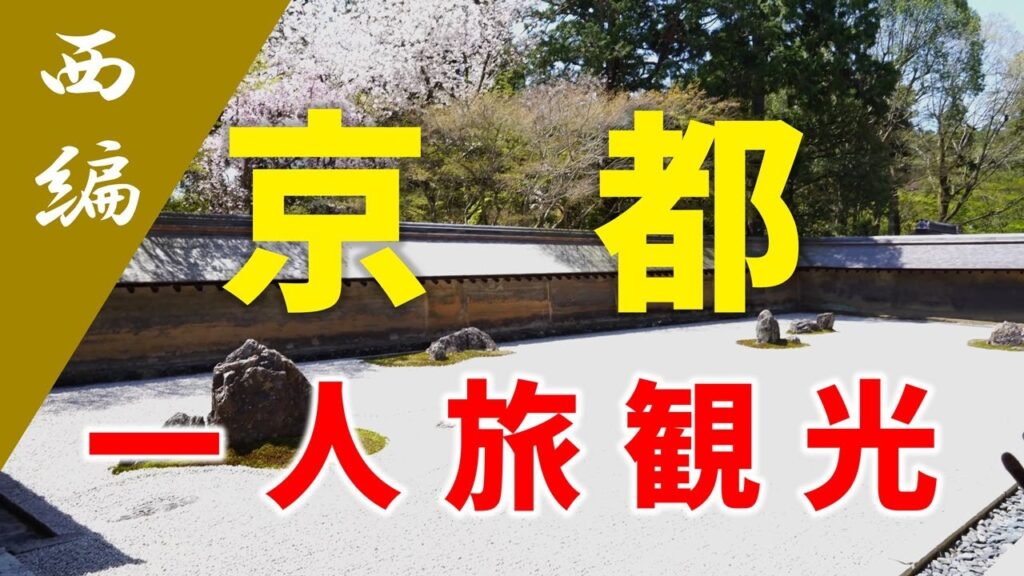
【桜/西編】京都の人気観光名所、日帰りで回りまくってみた!【金閣寺/仁和寺・御室桜/天龍寺/北野天満宮など】
Wednesday, April 10, 2024 at Tokyo Station Kyoto trip part 2!! First, about 3 months ago, [East part] Japan Kyoto’s popular sightseeing spots trip! I divided Kyoto City, the center of Kyoto, into east and west, and took on the challenge of covering the east area. The eastern area of Kyoto City is known as the "thousand-year capital”, and there are truly amazing sights and famous shrines and temples! This trip is the second part, the western part! Last time’s east edition was really amazing, but this time’s west edition also has some amazing sights! There are a total of 6 tourist attractions in Kyoto that I will be visiting this time. I wonder if I can visit all 6 places and come back to Tokyo Station on a day trip…! ? Spring season in april I’m also planning to visit a famous spot in Kyoto that is famous for its beautiful "Omuro" cherry blossoms! In addition to visiting shrines and temples, I would also like to stop by some of Kyoto’s most popular sightseeing areas for lunch! So I will enjoy this solo trip to Kyoto again this time!!! First of all, I will buy an ekiben for breakfast at the usual "Matsuri" as festival! Departs at 6:33am Nozomi Shinkansen No. 5 bound for Hakata This is my third trip to Kyoto, so I’m starting to understand more and more useful travel items. Disposable slippers (purchased on Amazon for about 700 yen for 10 pairs) My feet are always tired especially when I return from a trip, so this is very convenient to use on the Shinkansen! Hello!! Enjoy your trip to Kyoto! ! ! (by Mt. Fuji) My recent favorite Ekiben No. 1 “Beef Yakiniku Bento” 1,300 yen This bento box has a lot of ingredients and is excellent with two types of beef that taste delicious even when cold! Kyoto station It’s a weekday in April, but Kyoto Station is still extremely crowded! JR Kyoto Station Building As if in a dream, I arrived in Kyoto in the blink of an eye! I traveled about 320 miles in 2 hours and 12 minutes. This time too, I brought some things with me in preparation for my solo trip! Homemade guidebook! ! ! Kyoto trip west part I will be visiting 6 popular tourist attractions from the west side of Kyoto City! The star in the center of the map is Kyoto Station, where I am now! From Kyoto Station, I will first move to Kita as North Ward! Kita Ward is one of the 11 wards that make up Kyoto City, with the Kamogawa River running through it to the east, and a famous golden temple, so let’s go check it out! First, from Kyoto Station, take the JR San-in Main Line. JR San-in Main Line is over there, one floor below. First, let’s go down the escalator while looking to the right at the popular donut shop we stopped at at the end of the last East part! After getting off the escalator, I greet Kyoto Tower, the symbol of Kyoto! I’m glad you came to Kyoto again! The JR San-in Main Line is at platform E, so after passing through the ticket gate, I head to the right. I want to learn the Kyoto dialect little by little… "Han-nari" as japanese elegant "Oh-kini" as thank you "Oide-yasu" as welcome Turn right here and go to platform 33. 9:27am departure JR San-in Main Line bound for Sonobe Ninjas have appeared…! The JR San-in Main Line is a huge line with a total of 161 stations from Kyoto to Shimo-no-seki. Among them, the section from Kyoto to Sonobe is called the Sagano Line. In about 10 minutes, I arrived at Emmachi Station. Next, I will take Kyoto City Bus No. 205. In Kyoto, there are multiple bus stops even at the same bus stop, so be careful. (example: bus stop A, bus stop B…) But the solution is simple: first, look for the bus stop with that name, without worrying about platforms like A or B. This time, I will board the bus from the Nishinokyo-emmachi bus stop. If you go to the bus stop, there should be a sign indicating whether the No. 205 bus you will be boarding will be at Platform A or Platform B. Also, a map of the boarding point is also posted, so check it out and you won’t get lost. Let’s check it out! I found out that I can board bus No. 205 at bus stop E! All I have to do is check the bus stop map and head from my current location (D bus stop) to E bus stop! E platform of the Nishinokyo-emmachi bus stop. Very crowded…! I was able to ride it surprisingly smoothly! This is because even at E stop, there are multiple destinations, so not everyone queuing here was boarding the same bus. I got off at the bus stop called Kinkaku-ji Michi. The bus was very crowded…! Turn right here. I’m sure you’ve already figured out the first checkpoint. On the way here, there was a bus stop named "Tai-shogun" as General in Chief…! This is no longer a place name, but a job title. I arrived at a place like this in about 1 minute from the bus stop! 1st checkpoint: Kinkaku-ji Temple There was a sign at Kinkaku-ji temple that said, "Shooting for public display purposes are prohibited”, so unfortunately I refrained from shooting inside. *Image is from the official pamphlet Also, to avoid crowding, group photography was prohibited inside. By the way, do you know why this Kinkaku-ji temple is covered in gold leaf in the first place? The reason for this is deeply related to the Buddha’s ashes. Kinkaku-ji Temple was originally a building that housed the bones of Buddha. Since there was a custom of storing the Buddha’s ashes in a "golden container", so people in the past decided to use this large building itself as a golden container. For this reason, it was decided that this kind of gold leaf would be pasted on this temple. And the official name of Kinkaku-ji is Rokuon-ji temple. This temple was founded in 1397 AD. Yoshimitsu Ashikaga, the third shogun of the Muromachi shogunate, was said to have chosen this place to symbolize his power and wealth. The temple was destroyed by fire several times, most recently rebuilt in 1955, and underwent renovations in the 1980s. This 1980s is actually an important point! Japan at this time was in a bubble economy, which meant there was plenty of money. Therefore, this temple was able to use a large amount of gold leaf. Approximately 20 kg of gold leaf is said to have been used on the current exterior of Kinkaku-ji temple! I actually saw this Kinkaku-ji Temple, and it was truly gorgeous and wonderful…! ! ! A town called "Golden Town” appears in the popular Japanese manga "Frieren”, and this temple is no longer a "Real Golden Town”! In 1994, this temple was registered as a UNESCO World Heritage Site "Historic Monuments of Ancient Kyoto". In winter, you can also see the magical Kinkaku-ji Temple covered in snow! The 1st checkpoint has been cleared! The second point is located in Ukyo Ward, moving west from here. By the way, you may be wondering why this ward is called "Ukyo Ward" as "Right side ward", even though it is on the "Left side” of the map. This is the same reason why "Sakyo Ward", which we visited in the last East Part, is called "Left side ward", even though it is on the "Right side" on the map! First of all, "Ukyo" means the right side of the Emperor’s residence. However, since the Emperor sits facing south, "the right side as seen from the Emperor” would be "the left side” on a map with north at the top. Therefore, Ukyo Ward is located on the "left side" of the map, not on the "right side". Ukyo Ward was established in 1931 when several towns and villages were incorporated into Kyoto City. This ward has the largest area among the 11 wards in Kyoto City. So big…!!! In Ukyo Ward, there is a temple that is famous for its beautiful garden, so let’s go there! The place is about a mile from here, so I’d like to walk there. *If you are going by bus, take Kyoto City Bus No. 59 from bus stop A of Kinkakuji-michi and get off at Ryoanji-mae. Continue straight on this road for a while. I wasn’t able to shoot at the 1st checkpoint, but it saved me some time, which was helpful. The key to enjoying my trip may be to view travel problems in a positive light! By the way, when I visited Kinkaku-ji earlier, 92% of the visitors were foreign tourists, which is just my experience. Of the remaining 8%, 7% were students on school trips. (This is also my experience) There was a spot in Kinkaku-ji Temple where there was a long line, so I checked to see what was there, and it turned out to be a place to throw coins into a distant bowl. Even so, Kinkakuji was extremely crowded. I discovered Kura Sushi as famous conveyor belt sushi chain restaurant! In a traditional town like this, famous chain restaurants like Kura Sushi look fresh to me! A magnificent view of the mountain came into view. From Kinkaku-ji temple, I walked along the mountain for about 20 minutes. The 2nd checkpoint is Ryoanji Temple! First, purchase your ticket here. (600 yen) Wide…!!! Swim smoothly! At this point, I finally present the ticket I just purchased. Amazing number of people…! ! ! Ryoan-ji Temple was registered as a World Heritage Site in 1994 as a Historic Monument of Ancient Kyoto, and the most famous of these is the Rock Garden. This rock garden is called "Hojo Garden” and is designated as a national historic site and a special place of scenic beauty. Its characteristic feature is the overlapping waves expressed in the white sand pattern, creating a "kare-san-sui garden” style. Kare-san-sui is a Japanese garden style that uses sand and rocks to express a landscape without using water. In 1975, Queen Elizabeth II of England and Philip, Duke of Edinburgh, praised this garden highly during their official visit to Japan. It was amazing…! ! ! The atmosphere was indescribable. First of all, Ryoanji Temple is a temple located in Ukyo Ward, Kyoto City, and was founded in 1450 AD. The precincts at the time of its founding were much larger than the current site, and it is said that the precincts extended as far as the Keifuku Electric Railway tracks. Keifuku Electric Railway is a company that operates a tram known as Randen, as well as a cable car that climbs the famous Mt. Hiei. The founder of the temple was Katsumoto Hosokawa, a famous military commander from the Muromachi period, who was the commander-in-chief of the Eastern Army during the Battle of Onin. The 1st checkpoint, Kinkaku-ji, was used as a base for the Western army during the Battle of Onin, so these two temples are quite contrasting. In fact, this place was the first to be attacked by the Western army during the Battle of Onin, and was burnt down in 1468. However, 20 years later, in 1488, Katsumoto Hosokawa’s son Masamoto began rebuilding Ryoan-ji. In other words, this temple is connected to the Hosokawa family. The nature of this Ryoan-ji temple is also wonderful! It’s a treasure trove of nature…!!! Ryoanji Temple is also known as a famous spot for cherry blossom viewing, with approximately 400 different types of cherry blossoms blooming every year from late March to early April. So amazing…!!! 2nd checkpoint also cleared! The third point is also located in Ukyo Ward. There is a very beautiful temple that is famous for its Omuro cherry blossoms, so let’s head there right away! It’s about a 10 minute walk from here. When I reach the street I just walked down, keep going to the right. Last time’s east part was great, but this time’s west part has a completely different atmosphere and is a lot of fun! I found an authentic baked pudding shop…!!! I’m a little behind schedule. Turn right here. The 3rd point signboard is now visible! After clearing this checkpoint, it’s time for lunch, so I’ll do my best! Turn right here…? No, it’s the left one…! No matter how I looked, it was on the left…lol I made a momentary mistake when I saw an arrow with a curved tail… The 3rd checkpoint is Ninna-ji Temple. I found a short cherry tree that was about the height of my waist! At first I entered the temple from the east side, but I will try entering again from this south gate. I went outside from the Nio-mon gate on the south side. A little incident on the JR San-in Main Line… I was surprised when the strangers sitting in the back seat started talking naturally…! Nio-mon, the south gate of Ninna-ji Temple So big…!!! Today is the best time to see Omuro cherry blossoms! First, stand in line for tickets. It’s cherry blossom season, so there were a lot of people! Tickets can also be reserved online. I bought the most popular ticket out of 3 types! This ticket allows me to see the Omuro Cherry Blossom Festival and the garden. (1,100 yen) First, let’s take a look at the garden! Ninna-ji Temple is a temple located in Ukyo Ward, Kyoto City, and was founded in the 4th year of Ninna, or 888 AD. This era name "Ninwa" was a very short era that ended in about 4 years. Ninna-ji Temple also hosts shogi title matches, and is registered as a World Heritage Site as a component of the cultural assets of the ancient capital of Kyoto. It smells like my grandfather’s house. Ninna-ji Temple is very famous as a cherry blossom viewing spot, and a cherry blossom festival is held every April! Many famous shogi matches have been held at this place. Even though I haven’t seen the main attraction, the Omuro cherry blossoms, I’m already feeling very satisfied…! There are so many things to see at this temple that I’m running out of time… This is a fun problem! Next, let’s go to see the National Treasure Kondo and the Omuro cherry blossoms, which I was most looking forward to! The cherry blossoms at Ninnaji Temple are also known for their low tree height, and are also known as the Happy Cherry Blossoms. The reason why cherry blossom trees are so low is because the ground in this area is so hard that they cannot spread their roots deep. What is this… Amazing!!! Omuro cherry blossoms The cherry blossoms at Ninnaji Temple have been selected as one of Japan’s top 100 cherry blossom viewing spots, and some of the cherry blossom groves have also been designated as national scenic spots. At Ninna-ji Temple, which is a major cherry blossom viewing spot, amulets with cherry blossom designs are sold, and there are even "happiness charms” made with real four-leaf clovers. One important thing to note is that the cherry blossoms bloom at Ninna-ji Temple later than other famous places in Kyoto. *In 2024, I visited on April 10th, which was the best timing. Therefore, the cherry blossoms at Ninna-ji Temple are the finale of the cherry blossom season in Kyoto! Kannon-do Hall, an important cultural property It’s the perfect space, where I can create amazing pictures no matter where I point my camera… This five-storied pagoda, an important cultural property, is approximately 118 feet tall and features detailed chrysanthemum patterns. Commemorative tree planting for the Shogi "Ryu-oh" as King of Dragon match National Treasure Kondo It is the oldest existing Shishin-den as Emperor’s ceremonial hall, and the walls are said to have beautiful paintings in rich colors. The 50th song of the famous railway song, which I introduced in the previous East part, has the following lyrics. "Speaking of summer, the cool Shijo Bridge, Speaking of winter, Ginkaku-ji is a place with beautiful snow, Speaking of cherry blossoms, Saga Omuro in spring, Speaking of autumn leaves, Mt. Takao in autumn" The "Saga Omuro” in the song "Speaking of cherry blossoms, Saga Omuro in spring" refers to Ninna-ji Temple. In other words, even though there are many famous places in Kyoto, when it comes to cherry blossoms, Ninna-ji Temple is one of the most famous. Beautiful scenery that makes me regret leaving…! The 3rd checkpoint is also cleared! I’m getting hungry now, so it’s time for lunch! Ukyo Ward, where I am currently located, is a popular tourist area representative of Kyoto, and there are many delicious restaurants. Moreover, the next 4th checkpoint is also right nearby, so let’s head there right away! After exiting Nio-mon, the south gate of Ninna-ji Temple, continue along the main street in front of it. Take the train from Omuro-Ninnaji Station. I would like to visit Ninna-ji again if I have more time! It was wonderful… And I suddenly became hungry…lol Each of Kyoto’s famous temples is huge! I arrived at the station in about 4 minutes. Omuro-Ninnaji Station I’m getting on the train from the platform in the opposite direction, so I go through the railroad crossing to get to the other side. To Katabira-no-Tsuji (Very difficult Japanese) AM12:48 departure Landen-kitano Line bound for Katabira-no-Tsuji In about 6 minutes, I arrived at Katabira-no-Tsuji Station. From here, transfer to the Randen-arashi-yama Line. Kyoto has a very elegant train design! AM12:59 departure Randen-arashi-yama Line bound for Arashi-yama It took about 8 minutes to arrive at Arashi-yama Station. When you come to Arashiyama, the first thing you should see is the Kimono Forest. The sight of about 600 poles lined up using traditional Kyoto kimono fabric is a sight to behold! There are 15 different patterns and different colors. This Kimono Forest was created during the station renovation in 2013. Mr. Morita, a world-renowned interior designer, carefully selected and created the kimono fabric, from a long-established kimono fabric that has been around for about 100 years. Dragon Atago Pond, said to bring good luck Randen Line Arashi-yama Station Arashi-yama is one of Kyoto’s most famous tourist attractions, and is best described as "scenic”. First of all, Arashi-yama is a mountain with an altitude of 382m located in the western part of Kyoto City. However, in reality, the area that includes Arashiyama, the mountains to the east and west, and the foothills of these mountains is called "Arashiyama”. In particular, the Katsura-gawa River and Togetsu-kyo Bridge, which flow through the center of Arashi-yama, are very popular with tourists as symbols of Arashi-yama. So, let’s go to Togetsu-kyo Bridge! When I exit Arashi-yama Station, turn left. Today is a weekday, but it’s cherry blossom season, so it’s very crowded! I found a beef hitsuma-bushi restaurant! Katsura-gawa River, a first-class river Togetsu-kyo Bridge as the Moon Crosses Do you know why this Togetsu-kyo Bridge is named "Moon Crosses"? The origin of this name dates back over 700 years. It is said that when the retired Emperor Kameyama was boating at the time, he looked at the moon moving over this bridge and said the following. "Kuma naki tsuki no wataru ni niru." This phrase means, "The full moon looks like it’s crossing a bridge in a cloudless night sky”. That’s a very nice expression! "Shoku-geki no Soma" the popular cooking comics that was serialized from 2012 to 2019. I thought that the place called "Gatten no Ma" as Moon Sky Stage that appears in the comics, may have its origin from Togetsu-kyo Bridge. In this Moon Sky Stage, when the final cooking competition is held, the ceiling will first be shown cracking. On that stage, the time limit is from the moment the full moon appears in the night sky visible through the gap in the ceiling, until the moon completes crossing the "Sky Road” and disappears again. So, I will have lunch in the Arashi-yama area! I have already decided on a restaurant! It’s about a 2 minute walk from Togetsu-kyo Bridge! Don’t cross this bridge, but go to the right. Soba restaurant “Arashi-yama Yoshi-mura” I went into the restaurant, but there was an hour wait, so I gave up on eating at this restaurant…lol I will look for another restaurant! The next candidate does not cross this bridge again, but proceeds in the other direction. Walk for another 2 minutes and turn left at this location. Kyoto cuisine “Yoshi-ya Oku-no-niwa” as the garden at the back Chicken cutlet with egg set 2,100 yen Tofu, a specialty of Kyoto Zaru soba So delicious!!! There’s a traditional garden right in front of me! "Tori Katsu Ju Gozen" as Chicken cutlet with egg It also came with soba noodles, and it was a very good lunch! This restaurant apparently uses rice from Kyoto! “Yoshi-ya Oku-no-niwa” Above all, I was really grateful that I could get in without waiting! I gave up after waiting for an hour at the first restaurant, but as the name suggests, this restaurant is located "a little further back," so it might be a little-known restaurant. You can enter this restaurant without waiting, the food is delicious, and the atmosphere is great! Now that I’ve had lunch, let’s head to the next 4th checkpoint! This Arashi-yama area is also known for its many shrines and temples. The 4th point is actually located very close to here. It’s a famous shrine with an elegant garden that looks like a painting, so let’s head over there! It’s about 20 minutes late. A short detour to Togetsu-kyo Bridge Proceed along this road without crossing Togetsukyo Bridge. I head again in the same direction as the restaurant where I gave up after waiting an hour earlier. The sun was very strong today, so I brought a hat which helped! Wonderful atmosphere! Follow this road to the right. The atmosphere has become quiet. Many of the rickshaw staff are refreshing guys. It’s a really quiet place. The atmosphere is so quiet that you can hear the chirping of warblers. 4th Checkpoint: Tenryu-ji Temple I paid an admission fee of 800 yen and went inside. I dropped my hat…! When I returned to where I thought I had dropped it, a foreign tourist had picked it up! Moreover, he was trying to deliver it to the reception as a lost item! Sorry, thank you…! He was a very kind person…!!! Tenryu-ji Temple is located in Ukyo Ward, Kyoto City, and its founder is Taka-uji Ashi-kaga. This temple was built in 1339 to pray for the soul of Emperor Godaigo. This temple is associated with the Ashi-kaga family and Emperor Godaigo, and is listed as one of Kyoto Gozan. The Kyoto Gozan are five temples in Kyoto that were established in 1386 when Yoshimitsu Ashikaga was the shogun of the Muro-machi period. Apart from that, Nanzen-ji is a temple that is considered to be of a special class. In the 1400s, Tenryu-ji flourished as the capital of Kyoto, and its site was much larger than it is today, but due to repeated fires, all of the original buildings were lost. This temple is now registered as a World Heritage Site as one of the cultural assets of ancient Kyoto. Hojo backyard, a special scenic spot and historic site Tenryu-ji Temple is also one of Arashi-yama’s most famous cherry blossom viewing spots! (Usually the best time to see cherry blossoms is from late March to mid-April) Peace Kannon and Fountain of Love This temple was also a famous place that I would like to visit again! 4th checkpoint also cleared! The fifth point is located in Kamigyo Ward on the east side from here. Kamigyo Ward is part of Kyoto City and was founded in 1879. While Kamigyo Ward plays an administrative role, it is also a town where traditional performing arts and crafts are deeply rooted. Nishi-jin-ori, Kyoto’s representative high-class textile, is said to have developed from Kamigyo Ward to Kita Ward. And in Kamigyo Ward, there is a traditional shrine that is famous for its “blessings in learning”, so let’s go there! First, return to Arashi-yama Station. I got back on the Landen-arashi-yama Line and headed back to Katabira-no-tsuji Station. When entering this temple, I came from the south side, but on my way back I will exit from the east gate on the other side. After exiting this east gate, go to the right. I’m back on the main street where Arashi-yama Station is located! This east gate seems to have been the main gate. I’m about 40 minutes behind schedule. Therefore, there is a possibility that the remaining two checkpoints may not be completed in time for closing time… Arashi-yama Station I discovered Cremia’s soft serve ice cream…! Three-star luxury soft serve ice cream “Cremia” It is characterized by its dignified and beautiful shape. So delicious!!! Carrying a full-frame camera all day makes my shoulders stiff. But today I saw at least two people walking around with two cameras much bigger than mine…! Arashiyama may be the most lively tourist destination in Kyoto. I think this place is just as crowded and full of energy as the Kiyomizu-dera area that I visited in the last East part! The break is over! I’ll be back again, Arashi-yama! Landen-arashi-yama Line bound for Shijo-omiya I will change trains again at Katabira-no-tsuji Station! Randen-kitano Line bound for Kitano-hakubai-cho About 12 minutes from Katabira-no-tsuji Station, I arrived at Kitano-hakubai-cho! The fifth point is that the gate will close in 30 minutes, so I have to hurry…! When I exit the station, walk along the main street in front of me. The Randen-kitano Line I just rode on had 4 consecutive station names that were the names of temples…! The sun was gradually getting darker. After moving from Arashi-yama, I came to a place with a very calm atmosphere. But Arashiyama was such a wonderful place! By the way, in the last East part, I traveled a lot by bus, but this time, in the West part, I hardly rode the bus. The only time I took the bus this time was the route to the 1st point, Kinkaku-ji Temple. Instead, I was able to ride a lot of trams today, which I don’t usually ride at all, and it was fun! The swaying feeling of the tram is a very retro experience and is interesting! I discovered Kitano pudding…! A huge torii gate suddenly appears in the city! 5th Checkpoint: Kitano-tenman-gu Shrine Sanko-mon Gate, an important cultural property This gate was closed at 16:30, so I couldn’t see the main shrine inside this time… This Sanko-mon Gate is also famous for the legend of the "Star-missing Sanko-mon Gate.” Kitano-tenman-gu Shrine is located in Kamigyo Ward, Kyoto City, and was founded in 947, and is affectionately known as "Tenjin-san". This shrine is famous for being enshrined with Sugawara Michizane, who is said to be blessed with academic benefits. Therefore, it is now a popular spot among students. Michizane is generally seen as an extremely talented person. He was born in 845 into a family of scholars and grew up in a family that served the imperial court, and his intelligence was noticeable from an early age. It is said that he was composing Japanese poems by the time he was 5 years old, and Chinese poems by the age of 11. By the way, when I was 11 years old, I used to play with a toy called hyper yo-yo that was popular at the time…lol Michizane later became active as a scholar and government official, and was also skilled in politics. However, there was a person named Fujiwara Tokihira who thought that the talented Michizane was a nuisance. At that time, Tokihira instigated the then Emperor Daigo to demote Michizane to Dazaifu in Kyushu. It is said that Michizane’s treatment after this demotion was extremely harsh. Michizane passed away at the age of 59, just two years after moving to Dazaifu. This is a story from over 1000 years ago. And here’s the important part! Six years after Sugawara Michizane died, Tokihira, who had deceived the then Emperor Daigo and demoted Michizane, passed away. It may be enough to call it a reward for doing something bad, but the story doesn’t end there. Since then, a series of natural disasters such as lightning strikes occurred in Heiankyo, and rumors spread that it was a curse caused by Michizane. In response to this situation, the Imperial Court reversed Michizane’s demotion in 923 A.D., 20 years after Michizane’s death. This is incomprehensible… Because Michizane was no longer in this world. In any case, fearing Michizane’s resentment, his demotion to Dazaifu was rescinded, and he was again given the prestigious position of Minister of the Right. This is really incomprehensible… However, even if he did that now, the disaster at the imperial court would not end. Seven years after the revocation of the demotion, the residence of the then-emperor was reportedly struck by lightning. Furthermore, three months later, Emperor Daigo, who had been deceived by Tokihira and demoted Michizane, passed away. As a result of this situation, rumors such as "Maybe it was Michizane’s curse” were no longer just rumors. Regardless of whether or not these curses actually existed, even the imperial court was no match for lightning strikes. When Lord Michizane was demoted for a crime he did not commit, he sang the following to the plum tree in his home. "When the spring wind blows, please send me your scent. Plum blossoms, even though I am gone, don’t forget spring and bloom.” It’s a very fleeting phrase. Legend has it that this plum tree, which admired Michizane, flew to Dazaifu and followed him in just one night. Since then, this plum tree has been called "Tobi-ume” as flying plum and has been worshiped as a sacred tree. And this Tobi-ume tree still stands at Dazaifu Tenman-gu Shrine in Fukuoka Prefecture. (I want to go!) *The characters for "Dazaifu" (Japanese kanji) are slightly different between the past and present. And another highlight of Kitano Tenman-gu Shrine is the Sanko-mon Gate! "Sanko" as three lights refers to the sun, moon, and stars. Its origin lies in the carvings carved into the pillars, and this gate also has a wonderful legend. First of all, of the three lights of this Sanko-mon gate, only the "star" carving is deliberately not carved. The reason for this is that when the Emperor once prayed towards this shrine from the Kyoto Imperial Palace, the North Star shone just above this gate. In other words, the legend says that although the sun and moon were carved on the pillars, the star was not engraved on the gate because the stars were already in the night sky. (Star-missing Sanko-mon) However, I tried looking for these sculptures myself, but I couldn’t find them. I happened to be passing by and asked a staff member, who told me that it was inside the gate. *I found "sun", but I couldn’t find "moon" as it seems to be in a difficult to find location. "sun" I also cleared the 5th checkpoint! The sixth point is a shrine that is famous for a certain guardian deity, located to the west of the Kyoto Imperial Palace in Kamigyo Ward. It’s a place I personally really wanted to go to, so let’s head there! First, head to the Kitano-tenman-gu-mae bus stop. After exiting the main gate of the shrine, proceed in the opposite direction. I found the bus stop! Kitano-tenman-gu-mae B platform Bus number 51 is the correct answer. Exactly Kyoto! Has the bus arrived? Is this bus the correct one? (The bus from earlier was different…) This time it’s No.51…! ? (Just like playing bingo!) I unexpectedly found an advertisement for sightseeing in Yokohama, my favorite hometown, in Kyoto! The Blue Line written in the advertisement is Yokohama’s municipal subway. By the way, thank you for your positive feedback on the Yokohama travel video I posted last time…! I love the scenery and history of Yokohama Minato Mirai, so I worked especially hard to make this video! What’s…? (This is a very difficult bus stop name) Karasuma-shimo-choja-machi It took about 20 minutes by bus from the previous location. The final 6th checkpoint is already in sight, so let’s go! By the way, there is one thing I noticed on the bus I just took. The thing is that there are so many bus stops with the name "Ima-degawa"…lol It’s already before 6pm, but this spring season is bright! ! The last east part was on January 26, 2024, in the middle of winter, but this time the west part was on April 10, 2024, in the spring. In the east part, the sky was already dark at 5pm… I feel relieved that I can clear all the checkpoints in one day in this west part! To be honest, I was at the peak of fatigue when I visited the Arashi-yama area for lunch… After Tenryu-ji Temple, I ate Cremia’s soft serve ice cream at Arashi-yama Station and it really cheered me up! 6th Checkpoint: Goou-Jinja Shrine This Goou-Jinja Shrine is located in the same Kamigyo Ward as Kitano-tenman-gu Shrine, and is also a shrine to the west of the Kyoto Gosho. The year this shrine was founded is unknown. Kyoto Gosho is a place that corresponds to the old Imperial Palace. The current Imperial Palace is located directly in front of the Maru-no-uchi exit of Tokyo Station, which is always the starting point for this channel’s journey. For a long period of over 500 years, from 1337 to 1869, Kyoto Gosho was the residence of the Emperor. Goou-Jinja Shrine, located to the west of Kyoto Gosho, is revered as the "Guardian of the Legs” and "Boar Shrine”. The origin of these names is deeply connected to a person named “Wakeno Kiyomaro”. This person is someone we learn about in school classes in Japan. Wakeno Kiyomaro was an aristocrat who appeared in history from the end of the 700s. This Goou-Jinja Shrine is said to have its origins in the building of a shrine dedicated to Wakeno Kiyomaro within Jingo-ji Temple, which he founded. Also, due to a conspiracy incident that occurred in 769, Wakeno Kiyomaro was exiled to an island in present-day Kagoshima Prefecture. At that time, a monk named Dokyo, known as "Japan’s three evil people”, sent an assassin to Wakeno Kiyomaro, who was exiled to the island. There is a legend that in such a crisis, a herd of about 300 boars suddenly appeared in front of the assassin sent by Dokyo and saved Wake Kiyomaro. And when Wakeno Kiyomaro was attacked by the assassin, he was injured in the leg, but legend has it that once the herd of boars left, the wound in his leg mysteriously healed. For this reason, the boar has come to be respected as the "guardian of the feet and hips". And for this reason, this shrine is also called "Boar Shrine”. This Goou-Jinja Shrine may be a little less well-known than the famous tourist attractions such as Kiyomizu Temple and Fushimi Inari Taisha that we visited in the last East Part. However, Wakeno Kiyomaro and Goou-Jinja Shrine were depicted on the "10 yen bill” that was issued from 1890 to 1945. In other words, this shrine is a very historic shrine. By the way, I injured my knee at the end of 2022, the year before last. Since then, my injury has gradually healed, and I’m really happy that I’ve recovered to the point where I can now travel… Therefore, I wanted to visit this shrine once and express my gratitude! Also, this Goo Shrine is open until 9pm, which was very helpful! So, I was able to clear all 6 checkpoints! To return, take the Karasu-ma Line from Maruta-cho Station, which is a 10-minute walk away, and return to Kyoto Station. Feeling a little hyper due to fatigue and sense of accomplishment…lol "The weather as life is hopeful for tomorrow, the shadow of the moon cast over the willows." I’m probably the first person in history to arrive at Maruta-cho Station singing railway songs…lol I discovered French waffles…! JR Kyoto Station Building Today’s celebration venue! A winning cheese hot dog and… Cheers with Mister Donut’s "Matcha Cream Donut”, a collaboration product with Kyoto’s traditional matcha brand Gion Tsuji-ri! And when I looked up… this is a spectacular view of my favorite Kyoto Station building! Also on the left is Kyoto Tower, which was once again watching over me while I was traveling alone. When will the collaboration between Mister Donut and GODIVA resume…? Departing at 7:54pm Nozomi Shinkansen No. 464 bound for Tokyo travel souvenirs 10:05pm Tokyo Station I started from Tokyo Station at 6am today and reached the goal about 16 hours later! It was a very fun trip…! And very tired…lol Checkpoint 1: Kinkaku-ji Temple Checkpoint 2: Ryoan-ji Temple / Rock Garden Checkpoint 3: Ninna-ji Temple / Omuro Sakura as cherry blossoms Now that I’ve seen such a beautiful cherry blossom landscape, I may not be as impressed when I see cherry blossoms in other places in the future…lol Lunch time: Arashi-yama/Togetsu-kyo Bridge Someday, I would like to go and see the night scenery of Togetsu-kyo Bridge, which is where the word "crossing the moon" comes from! Checkpoint 4: Tenryu-ji Temple The 1st point, Kinkaku-ji, is a famous temple that everyone in Japan knows about, but I was very surprised at the splendor of the 2nd to 4th checkpoints! I’m a little embarrassed that I didn’t know about Ryoanji, Ninnaji, and Tenryuji until now…lol The route I took this time had checkpoints close to each other, so I think it’s an easy plan to recreate! It’s a little difficult to visit six places in one day like I did today, but I think you can easily visit four of them. Checkpoint 5: Kitano Tenmangu Shrine / Academic Benefits Although some places were closed, I was happy to be able to see the "Star-missing Sanko-mon Gate”! Once you pass through the torii gate of the shrine, it feels like you are in another world! I love that kind of solemn atmosphere! Checkpoint 6: Goou-jinja Shrine / Guardian of the legs and hips This time, coincidentally, the 1st to 4th checkpoints were temples, and the 5th to 6th checkpoints were shrines. I am very satisfied that I was able to fully enjoy the charms of both temples and shrines! And the last Mister Donut I visited is now a habit of mine…! By the way, I visited Kyoto for the first time at a certain stamp rally event at the end of last year (2023). This was my third time in Kyoto, and I feel like even just three day trips have expanded my world! For example, the JR Kyoto Station building feels like a second platform to me…lol I’m so moved by how close I feel and how my world expands even after just a few visits! Traveling is of course fun while you’re on the trip, but even when you’re preparing for the trip, you can imagine things and it’s fun for me. Best of all, even after I return from my trip, I will remember Kyoto even months later. I think one of the great joys of traveling is that your imagination expands and the world expands! Also, the more I get to know Kyoto, the more I realize that there are still many things I don’t know. I felt that the city of Kyoto has an amazing level of history. The MVP of this trip was the person who picked up the hat I dropped at Tenryuji Temple at the 4th checkpoint…! He was really kind and wonderful! I will be careful not to drop anything in the future…! Last time I dropped my guidebook in Yokohama, a foreign tourist noticed and told me about it. And this time, I dropped my favorite hat at a temple, and a foreign tourist picked it up…! I am reflecting… And finally, I have an important announcement regarding the upcoming Kyoto travel series! After watching this Kyoto travel series, have you ever wondered one thing? Yes, the East-West part has now reached its finale, but this time it’s just the East-West part of "Kyoto City". Yes, Kyoto Prefecture is not just Kyoto City. There are many tourist attractions outside of Kyoto City, in other words, on the south and north sides of Kyoto City, which is located in the center of Kyoto Prefecture. So I would like to try a trip to Kyoto [north-south part] in the future! Thank you very much for watching the video so far!!! See you again on another trip ☆彡
撮影日 2024年4月10日(水)
東海道シリーズ 第1弾
「京都の人気観光名所を日帰りで回りまくってみた!」
京都市・西エリア編
東京駅発&日帰りの京都一人旅、その後編です!
具体的には、6箇所の神社仏閣を回っていきます
今回は、ちょうど桜のシーズンに行くことができました!
1. 金閣寺(鹿苑寺)
2. 龍安寺 / 石庭
3. 仁和寺 / 御室桜
4. 天龍寺
5. 北野天満宮
6. 護王神社
■お問い合わせ先
azuki_web1737@yahoo.co.jp | あかね猫
※X(旧Twitter)は現在ログインできない状態のため、メッセージやコメントを頂いても確認・返信はできません。
プロフィールアイコン みそじ様 (@krs93dr)