
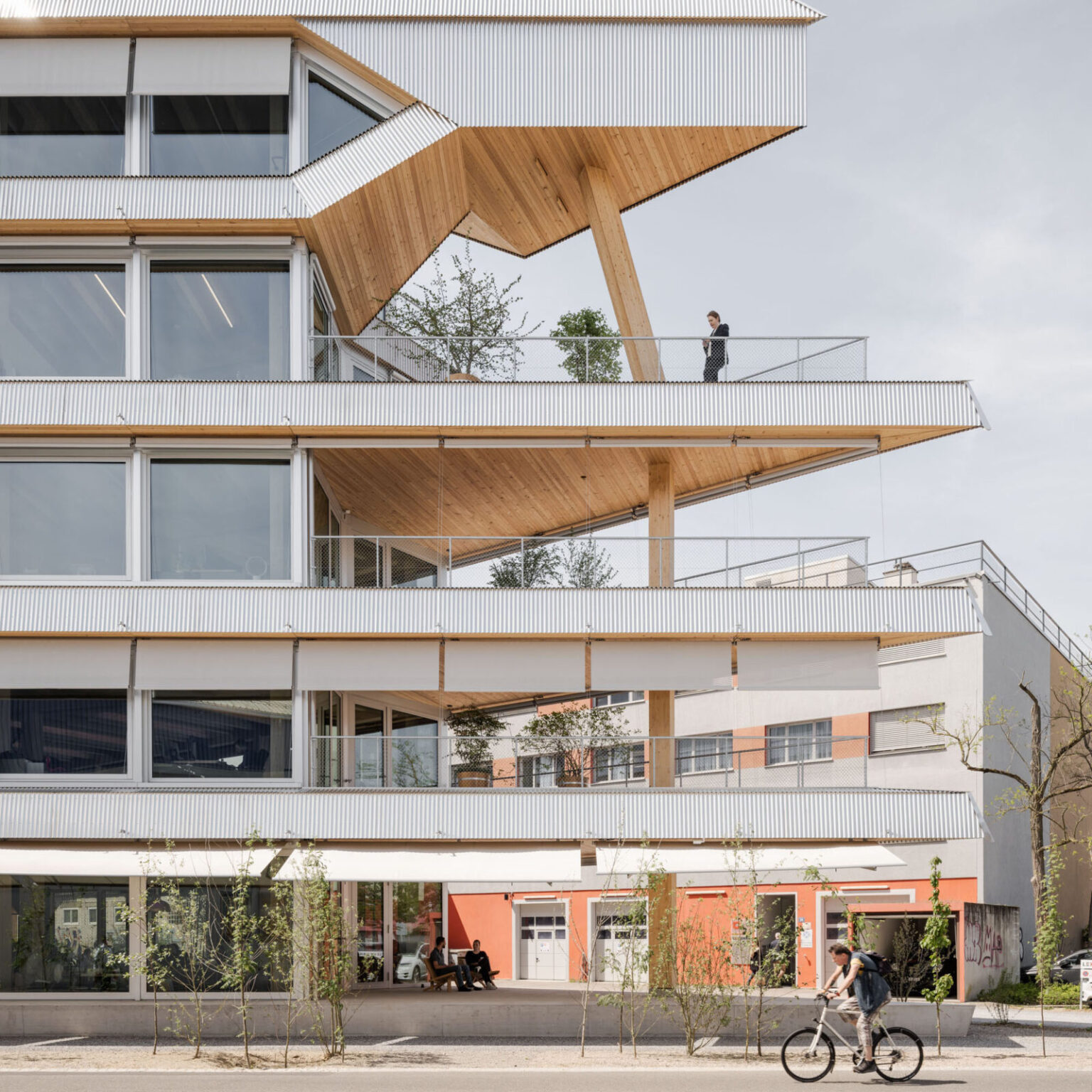
スイス・バーゼルに位置するヘルツォーク&ド・ムーロン(Herzog & de Meuron)の新社屋〈マイランド・シュトラーセ(Mailand-Strasse)〉は、300名以上のスタッフを1つ屋根の下に収容する新たな共同ワークスペースです。
インスピレーションと偶発的な交流を立体的に誘発する「垂直キャンパス」として設計されています。
注目ポイント
ヘルツォーク&ド・ムーロンが提唱する都市開発構想のさらなる一歩を体現する建築
敷地の制約と工業的な文脈から導かれた形態操作
エンボディド・カーボンを最小化する木造構造と最小限のコンクリート構造
将来的な解体と再利用を前提に設計された「資材の貯蔵庫」
(以下、ヘルツォーク&ド・ムーロンから提供されたプレスキットのテキストの抄訳)

©︎ Maris Mezulis

©︎ Maris Mezulis
バーゼルのザンクト・ヨハン地区にて長年稼働してきた社屋〈ラインシャンツェ・キャンパス〉に規模と活気において匹敵する〈マイランド・シュトラーセ〉の新たな建物は、300名以上のスタッフを1つ屋根の下に集め、新たな交流の機会を創出するよう意図して設計されている。ライン川沿いの旧キャンパスも規模を縮小しつつ活動を継続しているが、ドライスピッツ地区は私たちの日常生活や業務において、ますます重要な役割を担うようになってきている。
〈ラインシャンツェ・キャンパス〉で長年かけて行われてきた有機的かつ水平的な拡張とは対照的に、〈マイランド・シュトラーセ〉の建物は「垂直的なキャンパスをいかに構想するか」という課題に取り組んでいる。それは、単一の独立した多層階の建物内に設けられた、インスピレーションに満ちた共同ワークスペースである。

©︎ Maris Mezulis

©︎ Maris Mezulis

©︎ Maris Mezulis
都市的文脈:都市の拡張を見据えたプロジェクト
〈マイランド・シュトラーセ〉は、私たちが25年以上前に策定した構想「ビジョン・ドライスピッツ」と密接に関連している。これは都市を南側へと拡張し、旧ゾルフライラガー(保税倉庫)であったバーゼルの工業地帯を、住宅、教育機関、文化施設を内包する活気ある複合用途の都市地区へと転換する計画である。
以来、ドライスピッツはバーゼルの継続的な都市開発における重要な要素となっている。ヘルツォーク&ド・ムーロンのオフィスで制作、収集、保管されてきたさまざまなアイテムと資料等を収蔵・公開する〈ジャック・ヘルツォーク&ピエール・ド・ムーロン・カビネット〉から徒歩圏内に位置するこの新しい建物は、近隣のまち並みやかつての工業的な歴史的背景によってその姿を形づくられている。

©︎ Maris Mezulis

©︎ Maris Mezulis

©︎ Maris Mezulis
建築:敷地と周辺環境の特徴を体現する社屋
本プロジェクトは2つの包括的な原則に導かれている。第1の原則は、合理的かつ体系的な構造をもちながらも、独特で表現力豊かな特徴を備えた、明確な建築的アイデンティティの確立である。第2の原則は、建設や材料選定において循環性と低炭素化を優先した、現代的かつ環境に配慮した建物を創出することである。
かつてこの敷地とバーゼル中央駅を結んでいた旧鉄道路線沿いに位置する本プロジェクトは、周囲の工業地帯がもつ直線的な構造とスケールを取り入れている。建物の形態は、分岐する鉄道の引き込み線がなす鋭角によって定義される、敷地の幾何学的な形状に従っている。5階建ての基壇が大きな切妻屋根の土台となり、その屋根の下にさらに3つのフロアが配置されている。日影規制によって形づくられたこのシルエットが、建物に特徴的な存在感を与えている。
外から見ると、この建物は一見して反復的かつ合理的に秩序立てられているように見える。ファサードは、回転窓の水平な連続帯と波板金属製のパラペットパネルを特徴としており、近隣の工業建築を参照している。しかし、綿密に配置された設計上の介入がこの規則性を打破している。
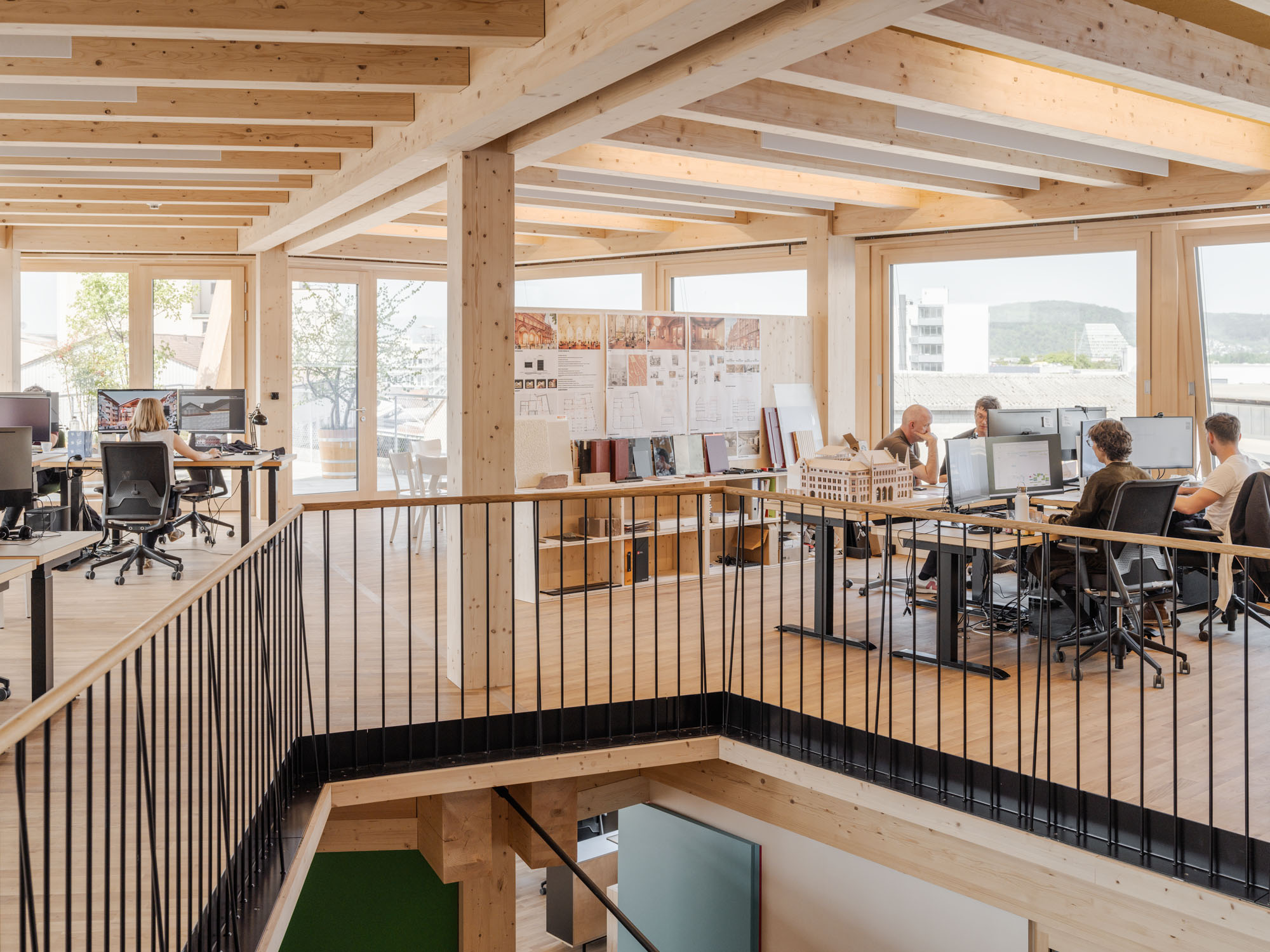
北端にある内部階段は、金属で覆われたその姿を外部に露わにし、2つの階を接続しながら周囲の実用的な構造物との関係性を構築している。さらに、ファサードに設けられた追加の開口部が、バルコニーやロッジアを生み出している。建物内部では、吹き抜け空間と開放的な階段室が各階を視覚的につなぎ、直接的な動線を生み出すことで、交流とコミュニケーションを促進する「垂直キャンパス」を形成している。

©︎ Maris Mezulis

©︎ Maris Mezulis

©︎ Maris Mezulis
持続可能性と施工:「資材の貯蔵庫」としての建築
建物の耐力構造は主に木材で構成されており、これにより建設に伴うエンボディド・カーボンを大幅に削減している。コンクリートは構造上不可欠な箇所、すなわち3つのコア、防火壁、および地下階に限定して使用されている。さらに段状の掘削を行うことで、必要なコンクリート量を最小限に抑えている。
建物の粘土製天井パネルに統合された冷暖房システムは、自然換気や、屋上および南側ファサードに設置された太陽光発電パネルと連動して稼働する。これにより、オフィスビル向けのSIA規格390/1に準拠した運用エネルギー消費の低減を実現している。
建設中の温室効果ガス排出量についても同様である。建物を構成するすべての層は解体を前提として設計されており、個別に解体・再利用することで、全体的な資材循環のサイクルに組み込まれ続ける。この戦略はファサードにも反映されており、内部の木構造は金属製の外装材によって保護されつつ、視覚的にもその構成が明確に読み取れるようになっている。
建物の建設や運用にとどまらず、地下には大規模な自転車駐輪場を設け、公共交通機関へのアクセスも容易にすることで、持続可能な通勤環境をサポートしている。

©︎ Maris Mezulis

©︎ Maris Mezulis

©︎ Maris Mezulis

©︎ Maris Mezulis
空間の多様性
空間のコンセプトは、ドライスピッツ地区の対岸に位置する、我々が長年拠点としてきた〈ザンクト・ヨハン・キャンパス〉の豊かな多様性から着想を得ている。ザンクト・ヨハンが数十年の歳月をかけて多様な建築タイプを内包するように進化してきたのに対し、〈マイランド・シュトラーセ〉の建物は、的確な建築的介入によって同等の空間的多様性を実現している。相互に接続された3つのコアが平面計画を整理し、建物全体に視覚的なつながりを生み出している。
開放的なワークエリア、会議室、静かな休憩スペース、共有ゾーンといった多様な環境が、フロアごとに交互に配置されている。特徴的な北側の階段、2層吹き抜けの図書室、そして2階建てのコラボレーションエリアといった垂直方向の要素が、空間の方向性を示し、チーム間の交流を促進する。さらに、屋上テラスやロッジアがこれらの空間を屋外へと拡張している。

©︎ Maris Mezulis

©︎ Maris Mezulis

©︎ Maris Mezulis
「〈ザンクト・ヨハン・キャンパス〉に加えて、新オフィスの建設地にマイランド通りを選んだことは、バーゼルおよびドライスピッツに対する私たちの長年のコミットメントを反映している。これは、私たちが20年以上前に提唱した「ビジョン・ドライスピッツ」(活気あふれる複合用途の都市地区を創出し、都市を南側へと拡張する構想)を推進するためのさらなる一歩である。フライラガー広場に近く、〈ジャック・ヘルツォーク&ピエール・ド・ムロン・カビネット〉、〈ハウス・オブ・エレクトロニック・アーツ〉、〈クンストハウス・バーゼルラント〉、〈FHNW〉に隣接する立地を意図的に選んだことに加え、スタッフのための新たな職場環境の設計は、当然ながら私たちにとって最優先事項であった」
「各フロアには、チーム間の交流を促進することを目的とした多様な空間ゾーンが設けられている。中央の階段が全7階を接続し、2つのアトリウムが隣接する階同士を視覚的に直接結びつけている。共同作業のためのオープンプラン・オフィスに加えて、個室オフィスや、小規模なディスカッションブースから大規模な会議室に至るまで、多様なミーティングスペースが用意されている。1階のカフェテリア、図書室、マテリアル・ライブラリー(素材資料室)といったオープンエリアや、各階の屋外スペースも、インフォーマルな交流の場として活用できる。各フロアは、(この建物の場合は垂直方向に)認識しやすく柔軟に利用可能な空間の地形を形成しており、数十年にわたって水平方向に拡張してきた我々の〈ザンクト・ヨハン・キャンパス〉に匹敵するものである」
ヘルツォーク&ド・ムーロン 創設者
ピエール・ド・ムーロン(Pierre de Meuron)
「建築基準法上許容される最大の建物ボリュームを起点とすることで、印象的な形態をもつ構造が導き出された。その外殻の内部において、建物は主に木材を用いた耐力構造から、ファサード、内装に至るまで、厳格な加算的論理に従って構成されている。すべての部材は独立した要素として構想・組み立てられており、将来的に解体して素材を再利用することが可能である。この意味で、この建物は『資材の貯蔵庫』としての役割も担っているといえる。」
「この原則こそが、建物の建築的表現を形づくっている。すなわち、個々の構成要素は独立したレイヤーやパーツとして視覚的に認識可能であり、それが建物の内観および外観に明確なアイデンティティを与えている。我々の目標は、オープンな作業環境という新たな用途を与えられながらも、物流やインフラによって色濃く定義づけられてきた土地の文脈にしっかりと根ざした建物を計画することであった。」
ヘルツォーク&ド・ムーロン パートナー
サンティアゴ・エスピティア・ベルント(Santiago Espitia Berndt)

©︎ Maris Mezulis

©︎ Maris Mezulis

©︎ Maris Mezulis

©︎ Maris Mezulis
©︎ Maris Mezulis

©︎ Maris Mezulis

©︎ Maris Mezulis

©︎ Maris Mezulis

©︎ Maris Mezulis


以下、ヘルツォーク&ド・ムーロンのリリース(英文)です。
Mailand-Strasse
Basel, Switzerland
2018 – 2025Comparable in scale and vitality to our long-standing Rheinschanze Campus in the St. Johann quarter of Basel, our new building at Mailand-Strasse brings over 300 people together under one roof and has been purposefully designed to create new opportunities for exchange. While our campus on the Rhine remains active on a smaller scale, Dreispitz is becoming an increasingly important part of our daily life and work.
In contrast to the organic, horizontal expansion that occurred over many years at Rheinschanze, Mailand-Strasse addresses the question of how a vertical campus can be conceived: an inspiring, communal workplace within a single, contained multi-story building.
Urban context
Mailand-Strasse is closely connected to “Vision Dreispitz,” a concept we developed over 25 years ago to extend the city southward, replacing an industrial area – Basel’s former Zollfreilager – with a vibrant mixed-use urban quarter including housing, educational institutions, and cultural facilities. Since then, Dreispitz has become a key element of Basel’s ongoing urban development. Located a short walk from the Jacques Herzog und Pierre de Meuron Kabinett, our building is shaped by the structure of the neighborhood and its industrial past.Architecture
The project is guided by two overarching principles. The first is the development of a clear architectural identity, characterized by a rational, systematic structure that nevertheless possesses a distinctive and expressive character. The second is the goal of creating a contemporary, ecological building whose construction and choice of materials prioritize circularity and a low carbon footprint.Located along former rail tracks that once connected the site to Basel’s main station, the project takes up the linear structure and scale of its industrial surroundings. The form of the building follows the geometry of the plot, which is defined by the acute angles of the branching rail spurs. A five-story plinth forms the base for a large, pitched roof under which three additional floors are arranged. This silhouette — shaped by regulations governing overshadowing — gives the building its characteristic presence.
From the outside, the building initially appears repetitive and rationally ordered. The façade features horizontal bands of pivot windows and corrugated metal parapet panels, referring to the neighboring industrial buildings. Carefully placed interventions interrupt this regularity: an internal stair at the northern tip reveals its metal-clad form on the exterior, connecting two levels and establishing a relationship to the surrounding utilitarian structures, while additional openings in the façade create balconies and loggias. Within the building, double-height spaces and open stairwells create visual connections and direct links between floors, forming a vertical campus that fosters exchange and communication.
Sustainability and construction
The building’s load-bearing structure is primarily timber, which significantly reduces its embodied carbon footprint. Concrete is used only where structurally necessary: in the three cores, the firewall, and the basement levels. A stepped excavation further minimizes the amount of concrete needed. Integrated within the building’s clay ceiling panels, the heating and cooling system operates alongside natural ventilation and photovoltaic panels on the rooftop and south facade. This ensures low operational energy consumption, in line with SIA standard 390/1 for office buildings; The same applies to greenhouse gas emissions during construction. All building layers are designed for disassembly, allowing them to be dismantled and reused independently to remain part of an overall material cycle. This strategy is reflected in the façade, where the inner timber structure is protected by a metallic outer skin while remaining visually legible.Beyond the building’s construction and operation, sustainable commuting is supported by a large bicycle parking area in the basement and easy access to public transit connections.
Spatial diversity
The spatial concept draws on the rich variety of H&dM’s long-standing St. Johann campus, located across the city from the Dreispitz neighborhood. While St. Johann evolved over decades to include a range of building types, Mailand-Strasse achieves similar spatial diversity through precise architectural interventions. Three interconnected cores organize the floor plan and establish visual links throughout the building.A mix of environments — open work areas, meeting rooms, quiet retreats, and shared zones — alternates from floor to floor. Vertical elements, such as the distinctive northern stair, a double-height library, and a two-story collaboration area, provide orientation and foster exchange among teams. Roof terraces and loggias further extend these spaces outdoors.
Quotes
The choice of Mailand-Strasse for our new building, alongside our campus in St. Johann, reflects our long-standing commitment to Basel and to Dreispitz. It represents a further step in advancing the “Vision Dreispitz” that we articulated more than 20 years ago: to expand the city southwards with a vibrant, mixed-use urban quarter. Beyond the deliberate choice of a location close to Freilagerplatz and alongside the Jacques Herzog and Pierre de Meuron Kabinett, the House of Electronic Arts, Kunsthaus Baselland, and the FHNW, the design of the new workplace for our staff was naturally of paramount importance to us. Each floor offers a variety of spatial zones intended to encourage exchange between teams. A central staircase connects all seven levels, while two atriums create direct visual links between pairs of floors. In addition to open-plan offices for collaborative work, there are enclosed offices and a range of meeting spaces, from small discussion booths to a large conference room. Open areas such as the ground-floor cafeteria, the library, and the materials library, as well as the outdoor spaces on every floor, can also be used for informal exchange. Each floor presents — vertically, in this case — a recognizable and flexibly usable spatial topography, comparable to our campus in St. Johann, which has grown horizontally over decades.Pierre de Meuron
Starting from the maximum permissible building volume, a structure with a striking form emerged. Within that envelope, the building follows a rigorously additive logic, from the predominantly timber load-bearing structure to the façade and interior fit-out. All components are conceived and assembled as distinct elements, allowing them to be dismantled and their materials reused. In this sense, the building also sees itself as a repository of materials. This principle shapes its architectural expression: the individual elements remain legible as separate layers and components, giving the building a clear identity both inside and out. The aim was to develop a building that, despite its new use as an open working environment, remains grounded in a context strongly defined by logistics and infrastructure.
Santiago Espitia Berndt
ヘルツォーク&ド・ムーロン 公式サイト
https://www.herzogdemeuron.com/